A Bad Deal Has Never Been the Answer When it Comes to Iran
- Gary Cohen
- Nov 24, 2013
- 4 min read
In April 1938, five months before the signing of the ill, fated “Munich agreement” and Neville Chamberlain’s naïve declaration of “Peace for our time”, The French Prime Minister at the time Edouard Daladier warned the British that Hitler’s real goal was to achieve “a domination of the Continent in comparison with which the ambitions of Napoleon were feeble.”
In a prophetic manner Daladier also stated, “Today, it is the turn of Czechoslovakia. Tomorrow, it will be the turn of Poland and Romania. When Germany has obtained the oil and wheat it needs, she will turn on the West. Certainly we must multiply our efforts to avoid war. But that will not be obtained unless Great Britain and France stick together, intervening in Prague for new concessions but declaring at the same time that they will safeguard the independence of Czechoslovakia. If, on the contrary, the Western Powers capitulate again, they will only precipitate the war they wish to avoid.”
Unfortunately accepting that France could not stand alone against Hitler, against his better judgement, Daladier and his government followed Britain’s lead and indeed capitulated to Hitler and Germany and we all know how that worked out.
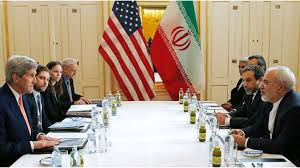
So today, having previously chosen to take a hard line against a bad deal with Iran in regard to its nuclear program, last night, the French, this time following the lead of the US and Britain; once again agreed to capitulate to an aggressive and dangerous power, with aspirations for at the very least, regional domination.
The same rules apply today as they did on 1938. Just as Daladier stated then, so today the West “must multiply its efforts to avoid war“. A deal is always far preferable to conflict, however in this case, only a deal which significantly curbs Iran’s nuclear program. The six powers needed to “stick together” to present intelligent compromise, but at the same time ensure a genuine halt to Iran’s nuclear program. In this agreement they have failed to do so.
Enrichment, along with the ability to produce plutonium is not required for civilian nuclear capacity. They are only required for the production of nuclear weapons. Why then has Iran insisted on maintaining these elements of their supposed peaceful program and importantly, why have the six powers who signed the deal agreed to let them keep them? Sadly, capitulation in the deal signed yesterday will indeed only precipitate the very conflict the West is so desperate to avoid.
With this interim deal, the West has handed the Iranians a clear victory and by allowing Iran to continue enriching uranium and further develop its nuclear program, inadvertently set the Middle East on course for far greater instability with potentially apocalyptic consequences. In the tough neighbourhood that is the Middle East, the nightmare scenario of a nuclear arms race is about to ensue.
The country which is known to be the number one supporter of terrorism in the world, the biggest supporter and advocate of the murderous Assad regime in Syria, which has threatened to wipe Israel, a United Nations member state; off the map, and which aspires to dominate the region and the Muslim world overall, is about to go nuclear.
They will not however be the only ones in the region to do so. The Saudis have stated clearly that in the event that Iran was to achieve nuclear capability, they too would “go nuclear”. Indeed there have been reliable reports that the Saudis have already struck a deal with Pakistan to purchase nuclear warheads. It will then only be matter of time before Turkey and Egypt pursue their own nuclear programs.
Allowing nukes to be added into an increasingly mercurial Middle East, where the Shia, Sunni conflict is spreading with rising levels of violence and cruelty, including the use of WMDs (chemical weapons, thus far); is at the very least, a huge error and display of woeful ineptitude.
All the platitudes and rationalisations cannot hide the fact that this deal strengthens and emboldens the Iranian regime and further contributes to an image of America and the West as a spent force in the Middle East. In signing this agreement, the US in particular has confirmed to its traditional Middle Eastern allies that they can no longer rely on their strongest ally.
They may well go elsewhere. Indeed it has already started with both China and Russia recently signing significant arms deals with traditional US allies. The consequences of these shifting alliances are hard to predict and further add to the fragile and fractious nature of the region.
This is of course only the first stage of the negotiating process on the road to a final and permanent agreement, which is to be completed within six months and where failure to comply will in theory “cost Iran dear”. However, by providing Iran with a further six months to work on their nuclear program, this interim agreement increases the probability that Iran will indeed achieve a nuclear weapon.
When the day comes when Iran declares to the world that it now possesses such a capability, along with all the justifications as to why it could not stand by its commitments under this agreement; many will be able to say, “I told you so”.
That however will be of little solace, as the region and the wider world contemplates how to deal with the Ayatollahs with the bomb, not to mention the scary and unpredictable consequences of nuclear proliferation across the Middle East.


Comments